
Creating The Circular Carbon Economy
Menu
SCENARIO 04
Biochar in Construction Materials
Develop better-performing circular products through controlled testing.
The Challenge
Construction and municipal infrastructure require materials with demanding performance, durability and cost characteristics. Biochar may introduce stored biogenic carbon into asphalt, concrete and other products, but the environmental benefit and technical suitability must be demonstrated for each formulation. Adding biochar alone does not make a product carbon-negative.
How the solution works
Start with a defined product and its conventional reference: an asphalt layer, paving product, planter or concrete element. Specify the required function and then investigate whether a particular biochar can be incorporated without unacceptable effects on mixing, workability, strength, moisture sensitivity, durability or construction processes. Evaluate the complete product, not only the carbon content of the added material.
Where to start and at what scale
Initial work can involve laboratory formulations and non-structural prototypes. Medium-scale projects include production-line trials and short municipal road sections; repeated procurement requires more robust evidence. Useful functional units include one tonne of specified asphalt, one cubic metre of concrete of defined grade, or an equivalent finished element with the same service life.
Material requirements and CASCADE experience
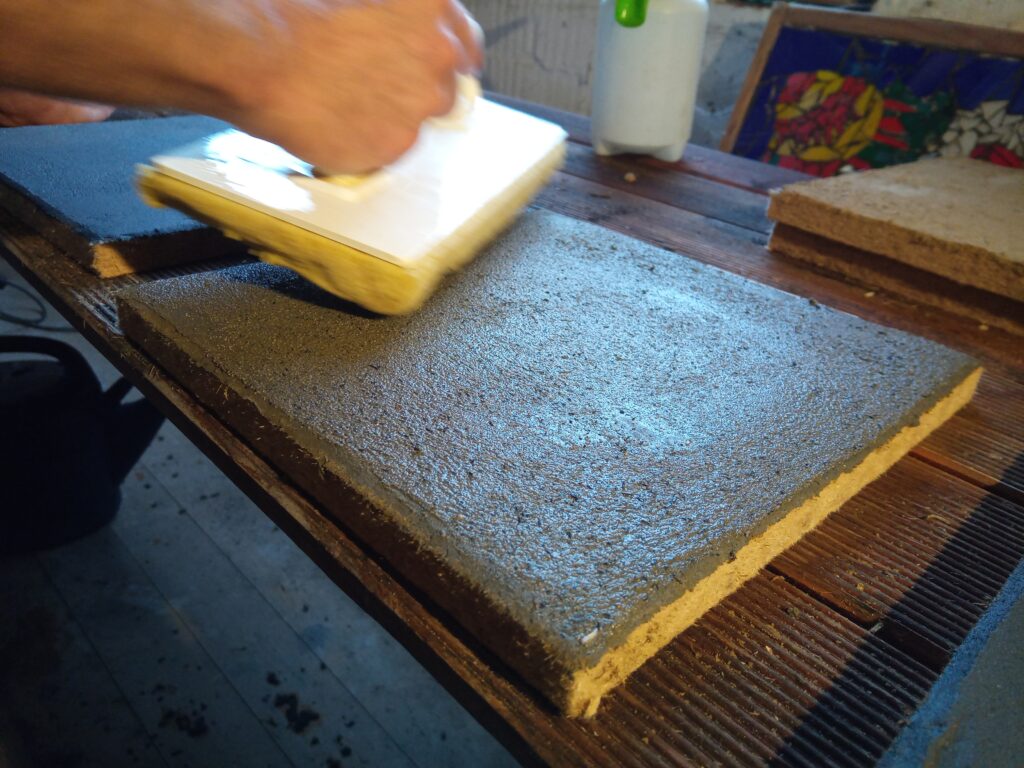
The Luxembourg and Enschede reports describe asphalt trials, concrete laboratory work and prototype products. In Differdange, the partner report describes a municipal asphalt application of approximately 200 tonnes over 1,650 m² with around 3% biochar by mixture mass and 40% recycled asphalt; the figures require confirmation before public publication. These trials demonstrate practical processing experience but do not establish one transferable recipe. Relevant quality data include feedstock origin, batch traceability, moisture, grain size, carbon and ash content, contaminants and precise dosage.
Recommended first steps
Choose a non-critical product with a willing producer and public or private client. Establish a reference specification and acceptance criteria. Obtain traceable biochar and compare controlled formulations. Test production and placement, then monitor a bounded demonstration for technical performance, costs and durability. Conduct a transparent life-cycle assessment before making claims of net-negative climate performance.
Related applications & calculators
Explore three ways to use biochar in construction. Each application page explains where biochar fits into the mix and includes a calculator to estimate the quantity needed for your project.
Concrete: Estimate biochar quantities from the volume of your concrete mix.
Asphalt: Explore material quantities for a road or cycleway.
Plasters & Renders: Estimate biochar quantities from wall area, layer thickness and mix proportions.
Connect with the CCMS
Market analysis can identify local construction demand and reliable biochar supply. Stakeholder mapping links procurers, producers and laboratories; CCMS carbon assessment supports comparison with conventional products. Evidence status: selected asphalt applications pilot-demonstrated, with other product routes at laboratory or prototype stages; long-term and whole-life claims remain to be validated.