
Creating The Circular Carbon Economy
BIOCHAR APPLICATIONS / CONSTRUCTION
Building with biochar.
Biochar in concrete mixtures
Explore how biochar may affect concrete performance and estimate the amount needed for your mix.
THE APPLICATION AT A GLANCE
What changes inside the mix.
How the type, particle size and dosage of biochar can influence cement-based materials.
Performance at low additions. In trials with 2–5% waste-wood biochar, some cement-based mixes showed improved mechanical strength and greater resistance to carbonation and chloride penetration. Results depend on the mix and the properties of the biochar.
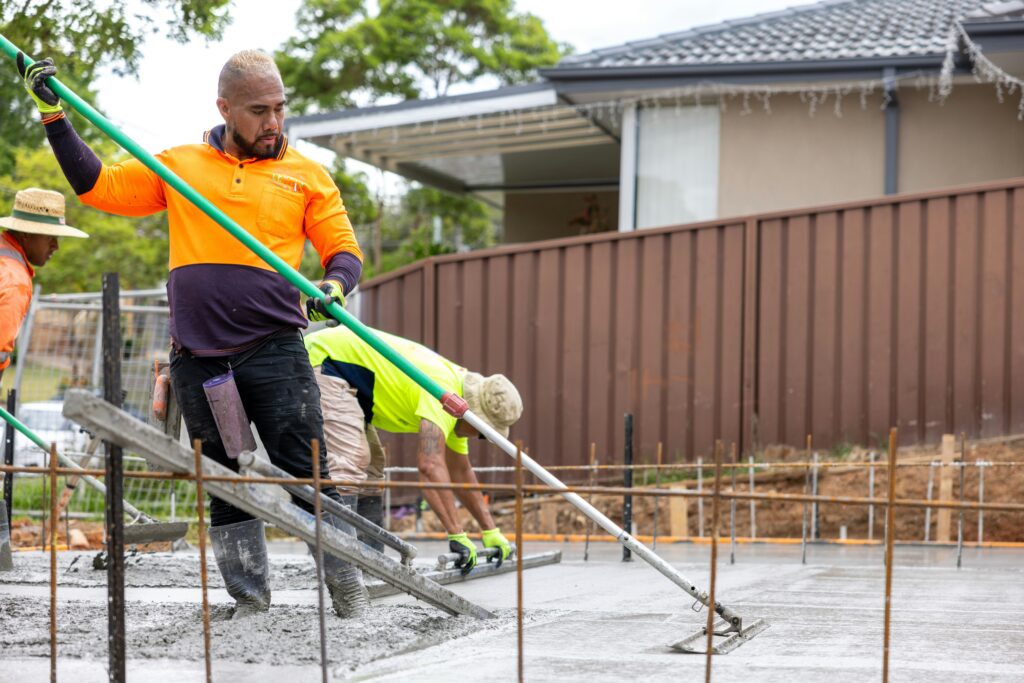
Higher additions and reinforced concrete. Concrete strength can decline above 10% biochar. Poured slabs are one possible application for mixes with higher additions. Suitability still depends on the slab’s design and tested performance. The long-term effects of high biochar additions on steel reinforcement remain uncertain.
Feedstock, particle size and carbon retention. The source biomass and particle size can influence how the material behaves. Under the conditions studied, less than 5% of the biochar carbon was estimated to oxidise over 100 years. The net climate effect also depends on biochar production, changes to the mix and the life cycle of the finished element.
Mineral content and alternative feedstocks. Minerals and metals in the biochar did not appear to impair concrete performance in the mixes studied. Dried sewage sludge is one potential feedstock. Any resulting biochar would need to be assessed for material performance, contaminants and leaching before use.
01 / STRENGTH
Strength & Curing
Some mixes have shown improved compressive strength. Porous biochar may also assist curing.
02 / Durability
Durability
Test resistance to carbonation and chloride penetration for the intended exposure.
03 / Thermal
Thermal Performance
Biochar may reduce thermal conductivity. Check the effect alongside strength and durability.
EXPLORE YOUR OWN SCENARIO
How much biochar for your concrete?
Enter your concrete volume. Use the calculator’s example assumptions or adjust the biochar share, bulk density and price in Advanced.
CONCRETE CALCULATOR
What to do
Please select the Biochar Type you want to use.
Enter your application rate.
Enter how many cubic metres you want to apply Biochar to.
Then click on the ‘Calculate’ button.
BEFORE YOU APPLY
Test the mix. Check the specification.
Confirm material suitability and the required concrete performance with the project team before specifying a mix.
Trial the proposed biochar and dosage against the reference mix. Check workability, strength, curing and durability for the intended use.
Assess steel protection, exposure conditions and the applicable project requirements with the design team. Use project-specific testing to set an acceptable dosage.
Check the biochar’s properties, consistency and suitability for construction. For feedstocks that may contain contaminants, assess the material and any relevant leaching requirements.
The preview estimates biochar mass and purchase cost. Use the relevant life cycle assumptions to assess carbon storage and the effects of changing other mix ingredients.
LOOKING AT THE WHOLE PICTURE
Have biomass of your own?
The production calculator explores how much biochar you could make from your available resources.