
Creating The Circular Carbon Economy
Circular Carbon Economy in Practice
CASCADE at the THREE C Network Conference in Kassel
From 14 to 16 April 2026, European researchers, practitioners, municipalities, businesses and project partners met in Kassel to explore how residual biomass can become a valuable regional resource.
The conference week brought together practical demonstrations, interdisciplinary discussions and collaborative workshops. Its central message was clear: creating a Circular Carbon Economy requires more than individual technologies. It depends on connected value chains that bring together biomass sources, processing methods, suitable applications, viable markets and committed regional actors.
CASCADE contributed its experience in developing and demonstrating circular biomass-to-biochar value chains across North-West Europe. Held within the wider THREE C network, the event provided an important platform for connecting CASCADE’s practical work with knowledge, experience and initiatives from other European regions.
From research to reality
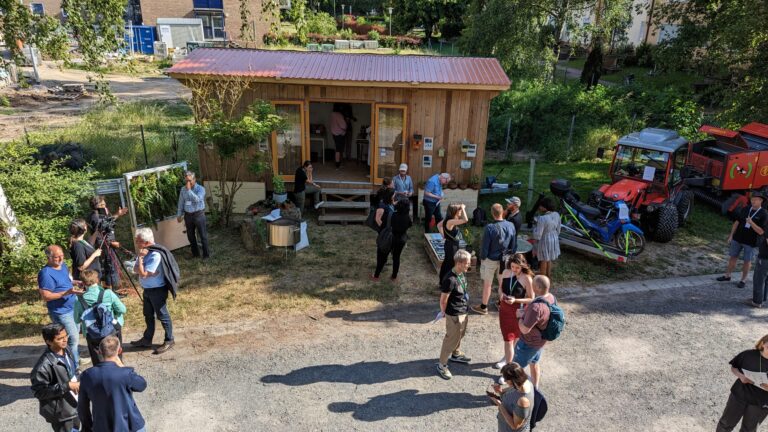
The conference week began on Tuesday with a dedicated practical programme for participants in the CASCADE Carbon Manager course. Around 50 participants from Ireland, the Netherlands, Belgium, the United Kingdom, Albania, Germany, France and other European countries visited three locations in the Kassel region.
The field day followed the journey from residual biomass to biochar and its practical applications. It allowed participants to examine how research, agriculture and commercial production contribute different elements to the same circular system.
Pictures from previous events
Preparing and converting residual biomass
At the University of Kassel’s TechLab in Eichenberg, participants explored three important stages of biomass conversion:
- Pre-treatment of green waste
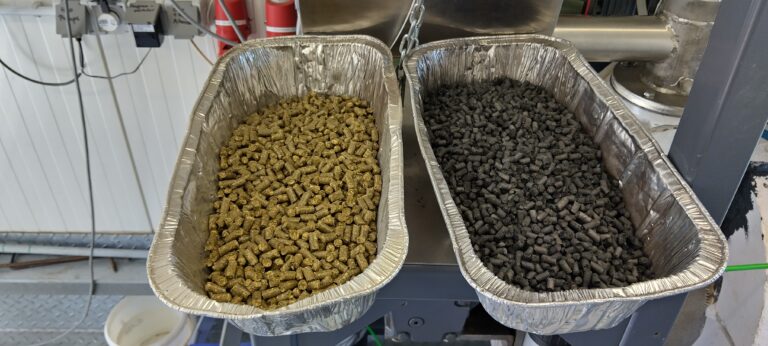
- Production of biomass-based pellets
- Small-scale pyrolysis for research and testing
The visit demonstrated how these technical components interact. It also highlighted one of the central challenges facing the sector: processes that work successfully in a controlled research environment must still be adapted, financed and scaled before they can become reliable regional solutions.
Climate farming and agroforestry
The second visit took participants to Hof Tolle, where agricultural production is combined with climate farming and agroforestry.
Trees and other perennial plants provide wind protection, strengthen the resilience of the farming system and produce additional resources such as nuts and biomass. Small-scale livestock farming forms another part of the integrated approach.
The visit showed how nature-based solutions can become part of everyday agricultural practice. Discussions also addressed the economic viability of agroforestry and the time required to establish new cultivation systems.
Moving towards market-oriented biochar production
At KohleHelden, participants visited a mid-scale pyrolysis system that converts regional tree-care residues into biochar.
The visit showed how biochar production is developing beyond experimental systems towards specialised, market-oriented applications. It also demonstrated why product quality and process control are essential. Different applications require different biochar properties, while sensitive uses—such as animal-feed additives—demand especially high and consistent standards.
Together, the three visits illustrated the full development pathway: from research and biomass preparation to land-based applications, certified production and emerging markets.
From waste to value
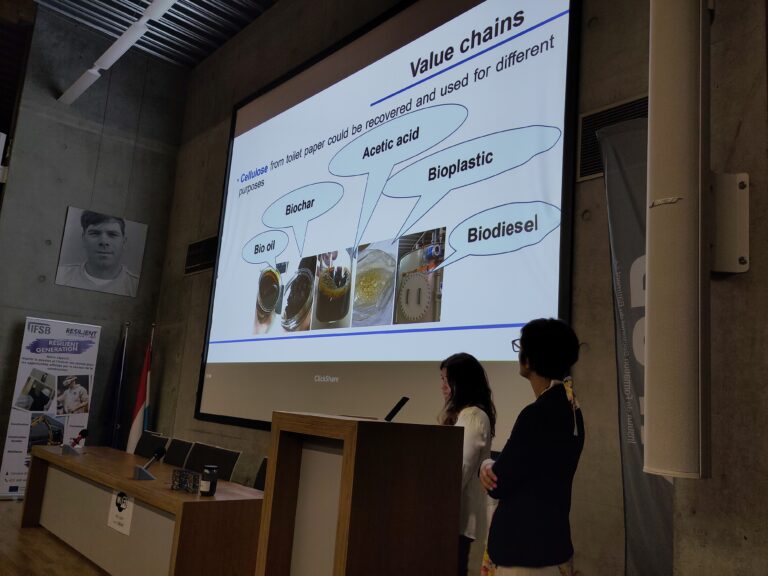
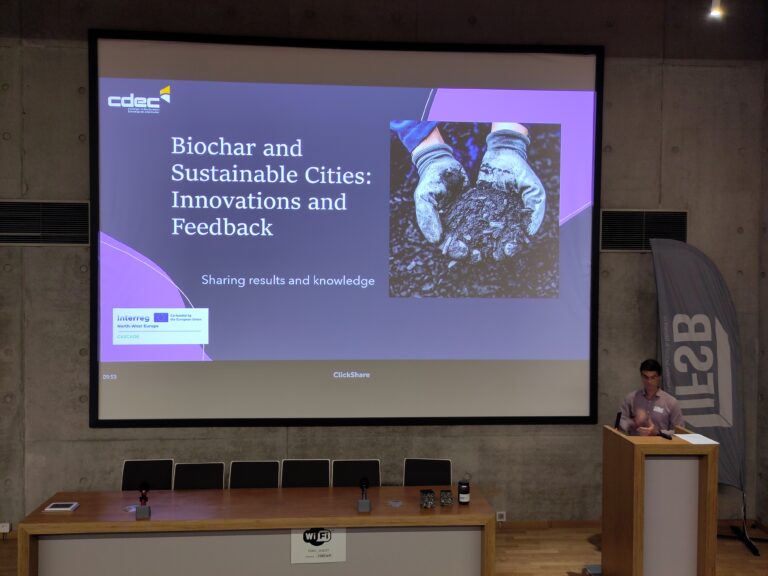
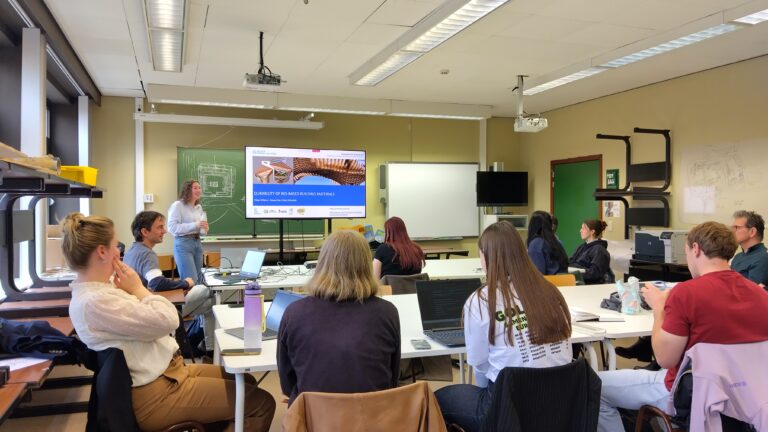
On Wednesday and Thursday, more than 60 participants gathered at the University of Kassel’s Alte Glockengießerei for the THREE C Network Conference.
Under the guiding theme “From Waste to Value – A System of Opportunities,” the conference examined how residual materials can support new environmental, social and economic opportunities.
Presentations and discussions explored several possible starting points:
- Green waste as a locally available resource
- Hemp as a multifunctional crop for different material applications
- Woody biomass such as willow for energy, materials and textiles
- Municipal biomass streams for pyrolysis and biochar production
- Biochar applications in agriculture, construction, landscaping, water treatment and technical filtration
No single resource or technology can establish a Circular Carbon Economy on its own. Each represents one part of a wider system in which cultivation, collection, processing, conversion, application and reuse must be connected.
Connecting different perspectives
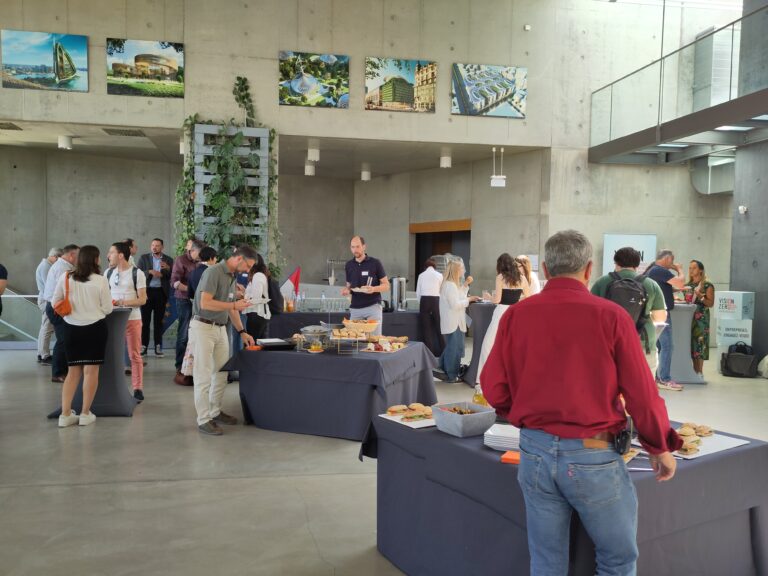
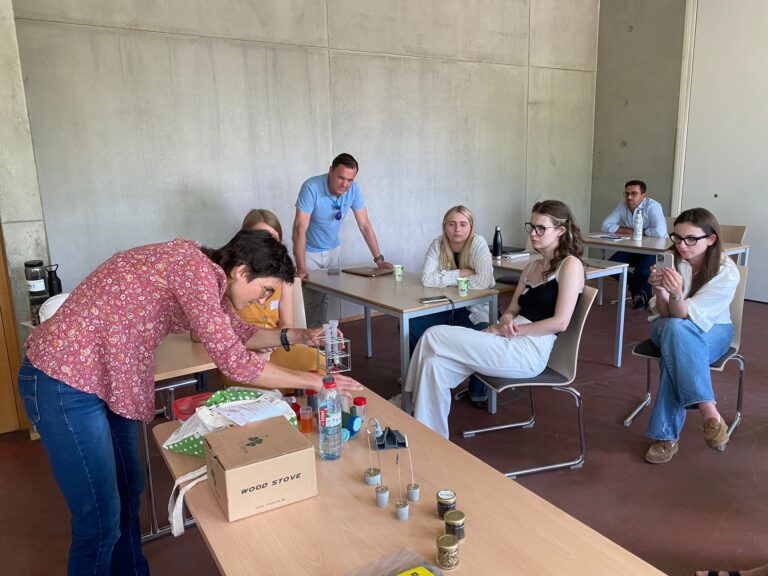
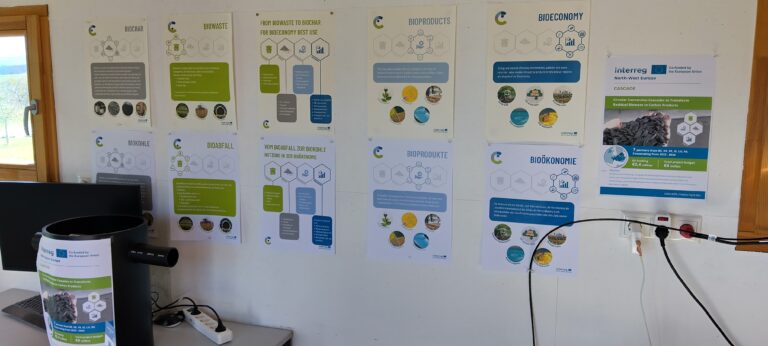
The conference combined expert contributions with interactive and practice-oriented formats. Participants exchanged their experiences through workshops, World Café discussions, barcamp sessions and a hybrid exhibition.
The exhibition organised examples around four connected areas:
- Biowaste
- Biochar
- Bioproducts
- Bioeconomy
Physical products and practical examples provided starting points for deeper discussions. Participants were able to examine materials, compare different approaches and connect technical developments with the regional conditions needed for implementation.
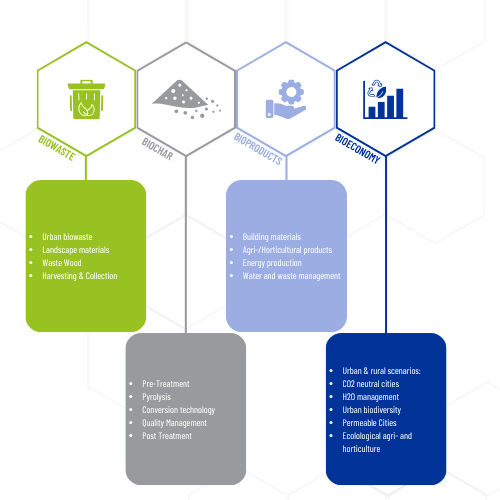
An important strength of the conference was its openness. Participants shared successful developments, but they also discussed approaches that had not worked as intended. This honest exchange is particularly important in an emerging field where technologies, markets and regulatory requirements are still evolving.
Bridging innovation and implementation
Many circular carbon technologies and product ideas have already reached the pilot or demonstration stage. However, moving from promising experiments to stable regional value chains remains difficult.
The conference identified several recurring barriers:
- Unclear business cases and investment pathways
- Complex certification and quality requirements
- Fragmented supply and value chains
- Logistical challenges between biomass sources, processing and end users
- Limited awareness among potential users and decision-makers
- Resistance to changing established practices and markets
These challenges demonstrate that the Circular Carbon Economy is not purely a technical undertaking. Successful implementation also depends on cooperation, organisational capacity, economic viability and long-term regional commitment.
Researchers can develop and test new approaches. Businesses can turn these ideas into products and services. Municipalities can create supportive conditions and connect local actors. Farmers, landowners and communities can provide resources, practical knowledge and places for implementation.
All these perspectives are necessary.
Building a community for circular carbon solutions
One of the strongest conclusions from the conference was that the foundations of a Circular Carbon Economy already exist. Technologies are available, practical applications are being tested, and actors across Europe are developing new approaches.
What remains necessary is stronger connection:
- Between research and commercial implementation
- Between biomass producers and product developers
- Between rural resources and urban or industrial applications
- Between technical innovation and viable business models
- Between individual pilot projects and long-term regional strategies
Events such as the THREE C Network Conference create space for these connections. They support the exchange of practical experience, strengthen trust between sectors and provide a starting point for new partnerships and projects.
For CASCADE, the Kassel conference was therefore more than an opportunity to present project activities. It was an important step in connecting regional pilots, practical applications and European expertise—and in moving circular carbon solutions from promising ideas towards lasting implementation.