
Creating The Circular Carbon Economy
BIOCHAR APPLICATIONS / URBAN LANDSCAPES
Manage rain.Grow greener streets.
Biochar for stormwater and urban planting
Explore how biochar can manage runoff where it falls and support urban vegetation.
THE APPLICATION AT A GLANCE
Give rainwater somewhere to go.
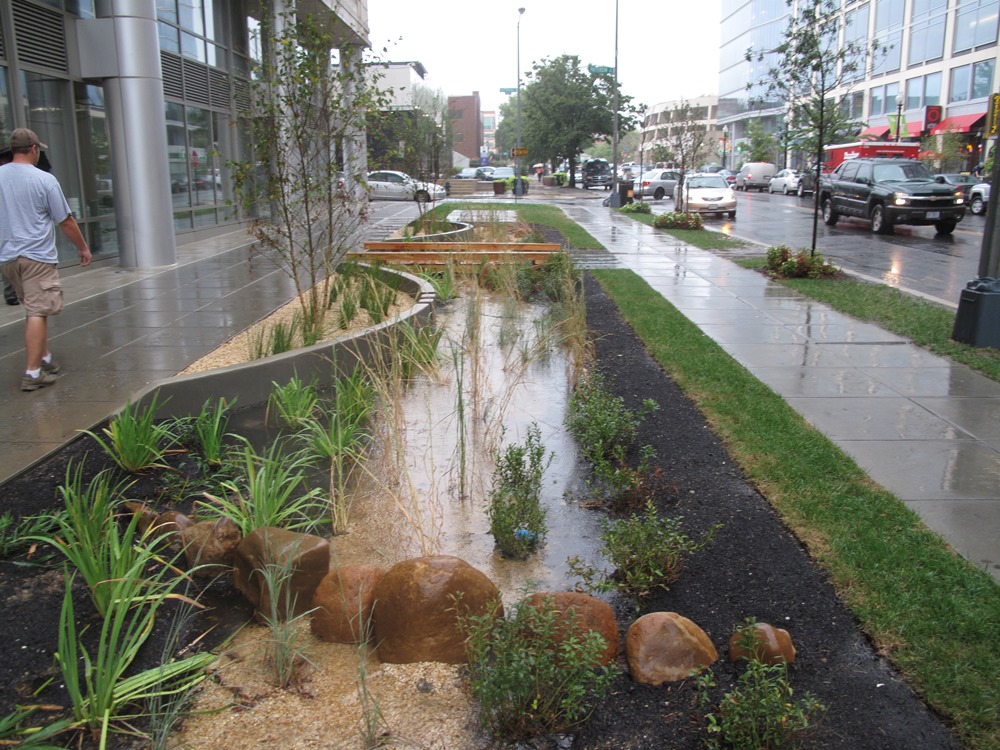
Use biochar in swales, rain gardens, tree pits and infiltration basins to hold and filter stormwater.
Slow and filter runoff. Biochar’s pores store water and release it gradually. In a suitably designed system this can improve infiltration, reduce runoff and flood risk, and help capture pollutants such as heavy metals and hydrocarbons before discharge.
Improve urban growing conditions. In green roofs and planting beds, biochar adds organic carbon to degraded soils and can improve fertility, structure and aeration. Better root development and moisture retention can reduce plant stress, improve drought tolerance and lower irrigation needs.
Support greener public spaces. Healthier plants may last longer and require less maintenance. Combining stormwater management, soil improvement and long-term carbon storage can help cities adapt to climate pressures while improving green spaces for residents.
01 / WATER
Retain Stormwater
Store water where it falls and release it more gradually.
02 / PLANTING
Reduce Plant Stress
Support rooting and water availability during dry periods.
03 / Filtration
Capture Pollutants
Help filter contaminated runoff before it leaves the site.
EXPLORE YOUR OWN SCENARIO
How much biochar for your planting mix?
Enter the volume of fill you want to treat. Use the example assumptions or adjust the biochar share, bulk density and price in Advanced.
ASPHALT CALCULATOR
What to do
Please select the Biochar Type you want to use.
Enter your application rate.
Enter how many cubic metres you want to apply Biochar to.
Then click on the ‘Calculate’ button.
BEFORE YOU APPLY
Design for water and plants together.
Match the mix to local drainage, planting needs and expected runoff quality.
Assess where runoff enters, how the system drains and how much water the plants need. Check that the mix is suitable for the intended planting and any pollutants it may capture.
One illustrative comparison replaces 1 m² of roadway with a 1 m² rain garden that is 1 m deep. It uses 97 kg CO₂e per m² for production, transport and construction of hard road materials. Actual emissions depend on the proposed design.
LOOKING AT THE WHOLE PICTURE
Have biomass of your own?
The production calculator explores how much biochar you could make from your available resources.