
Creating The Circular Carbon Economy
BIOCHAR APPLICATIONS / ROADSIDE & PUBLIC GREEN SPACES
Manage verges.Use the cuttings.
Biochar from roadside and green-area maintenance
Explore how roadside and public green-space maintenance can supply biomass for local use.
THE APPLICATION AT A GLANCE
Make use of what you cut.
Managing grass, weeds and trees along roads helps keep them safe. Collecting the cuttings opens up options for using the material locally.
Decide what to leave on site. Grass mulch can enrich the soil and favour grasses over wildflowers. Woodchip piles can encourage honey fungus and shelter pests.
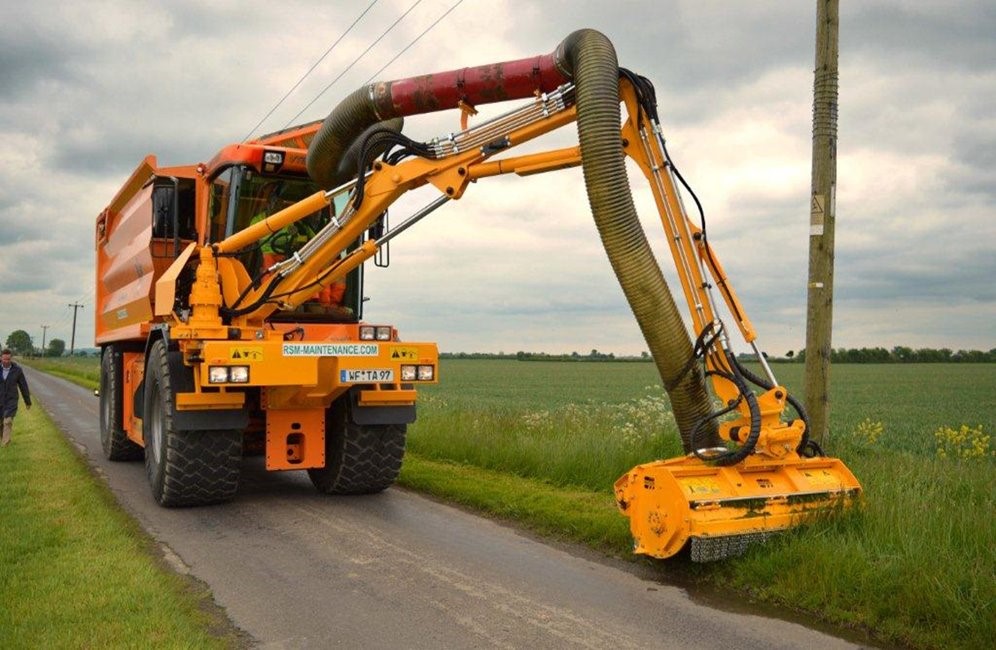
Separate green and woody material. Green cuttings can go to biogas production. Woody chips can be collected, dried and converted to biochar. Some equipment can collect chipped hedge trimmings too.
Compare local conversion options. Haulage and pre-processing add costs and emissions. Over longer distances they can outweigh the carbon benefit of conversion. A small local plant or a mobile containerised unit may improve both the economics and the carbon balance.
Use the biochar locally. Biochar can support roadside planting or filter pollutants from highway runoff. Producing it locally can sometimes cost less than buying it from an external supplier.
Account for transport and preparation. The worked carbon example applies a 10% penalty to the correction factor for additional transport and processing before conversion.
01 / FILLER
Make use of cuttings
Route green cuttings and woody chips to suitable uses and reduce waste.
02 / Local Use
Supply local projects
Use suitable biochar for roadside planting or runoff filtration.
03 / Carbon
Check the emissions balance
Compare the carbon benefit with emissions from transport, preparation and conversion.
EXPLORE YOUR OWN SCENARIO
How much biochar could you produce?
Enter the length of verge to be harvested. Use the example assumptions or adjust the harvest, conversion yield and additional cost in Advanced.
VERGE & GREEN AREA MANAGEMENT CALCULATOR
What to do
Please enter how many kilometres of roadside you want to recover material from.
Then click on the ‘Calculate’ button.
BEFORE YOU APPLY
Plan the route from verge to use.
Confirm the mix design with the asphalt producer and check the requirements for the intended pavement layer.
Estimate the harvest per kilometre and separate woody chips from green cuttings. Check drying and storage needs before conversion.
Compare collection, drying and conversion with leaving the material in place. The full calculator includes an on-site decomposition comparison and separate correction factors.
LOOKING AT THE WHOLE PICTURE
Have biomass of your own?
The production calculator explores how much biochar you could make from your available resources.