
Creating The Circular Carbon Economy
BIOCHAR APPLICATIONS / HEAT & ENERGY
Useful heat. Valuable biochar.
Heat and biochar from pyrolysis
Explore how a business, farm or municipality could use the heat from biochar production.
THE APPLICATION AT A GLANCE
Put pyrolysis heat to work.
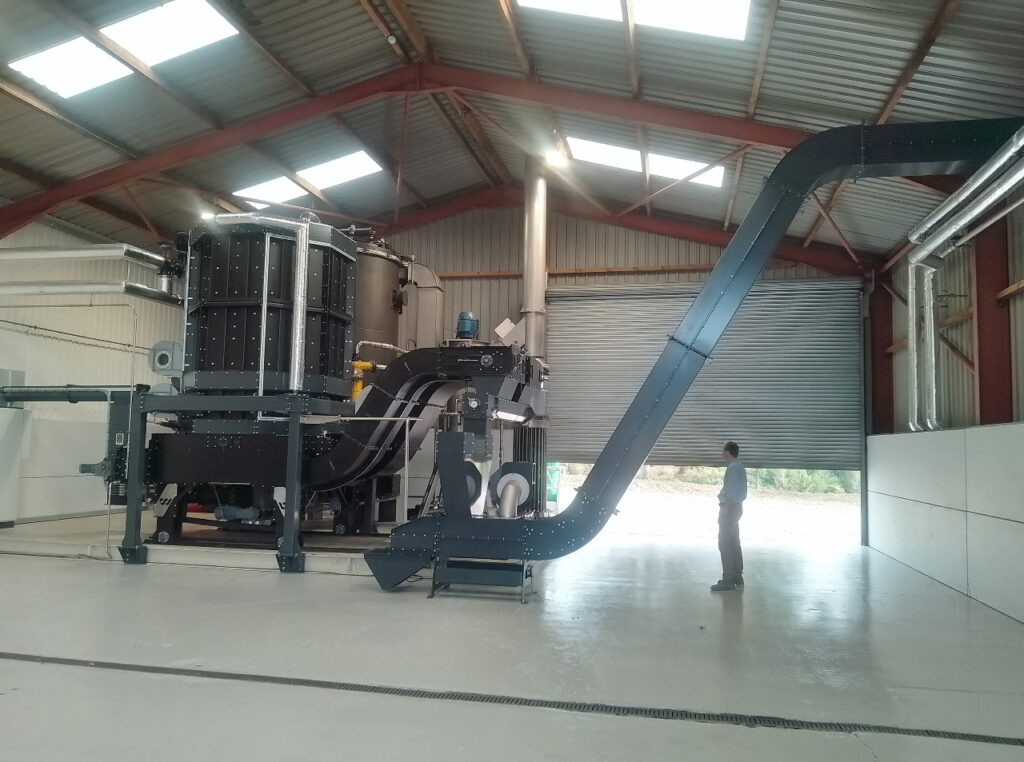
Pyrolysis produces recoverable heat alongside biochar. Kilns designed for heat recovery can supply space heating and hot water. Larger units can serve industrial processes, and some also generate electricity.
Woodtek in Wales, UK. The installation supplies heat to a factory making timber buildings and biochar to the adjacent farm. It can deliver under 1 MW of heat and under 65 kW of electricity, alongside 1,000 tonnes of high-quality biochar per year.
Biomacon in Germany. The smaller unit has a rated heat output of 160 kW. A short heat main carries hot water to the farmhouse and five neighbouring properties. The unit also produces 120 tonnes of high-quality biochar per year for local garden centres and food growers.
Municipal heat. Pyrolysis can be assessed alongside natural gas or conventional biomass heating for swimming pools and sports complexes. Sourcing biomass locally and selling biochar back to fuel suppliers could help lower operating costs. Returning the biochar to soil could support net-negative heating if durable carbon storage outweighs emissions across the system.
01 / HEAT
Use the recovered heat
Supply space heating, hot water or industrial processes from the same installation.
02 / BIOCHAR
Create a useful co-product
Match the biochar produced to local growers, farms or other suitable markets.
03 / Electricity
Assess power generation
Some larger installations also generate electricity.
EXPLORE YOUR OWN SCENARIO
How much heat do you need?
Enter your annual heat demand to explore the biomass requirement and biochar output.
HEAT PROJECTS CALCULATOR
What to do
Enter how much heat output (in MWh/year) is required.
Then click on the ‘Calculate’ button.
BEFORE YOU APPLY
Match supply to demand.
Assess heat demand, local feedstock and how the biochar will be used together.
Match the equipment to the site’s heat demand over the year. Confirm the required temperatures and whether a heat main is needed to reach nearby buildings.
The calculator uses Urban as an example biochar grade and €100 per tonne as an indicative value after costs. Check the actual grade, end use and local market. In the carbon balance, account for emissions from pyrolysis and the supply chain, durable carbon storage in the final application and the emissions of the heat source being displaced.
Review emissions controls and local air quality when comparing biomass-based heating options. The Potential Air Quality Impacts from Biomass Combustion (PDF)
LOOKING AT THE WHOLE PICTURE
Have biomass of your own?
The production calculator explores how much biochar you could make from your available resources.