
Creating The Circular Carbon Economy
BIOCHAR APPLICATIONS / ROAD CONSTRUCTION
New materials.For the road ahead.
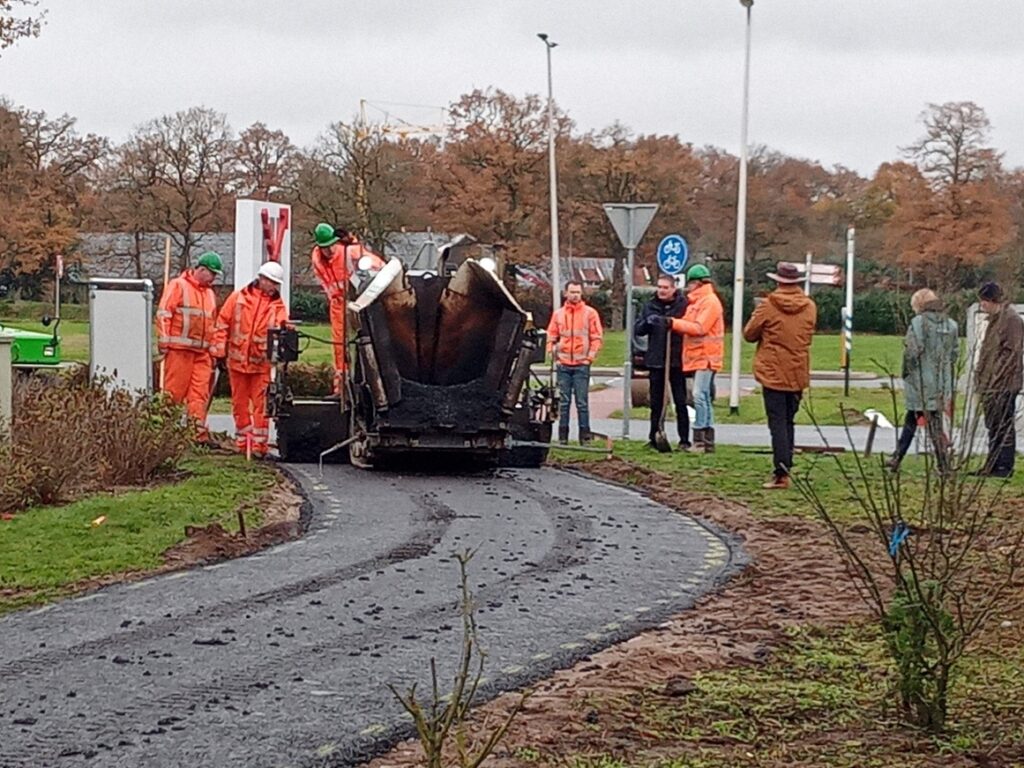
Biochar in asphalt mixtures
Explore where biochar could fit into an asphalt mix and estimate material quantities for a road or cycleway.
THE APPLICATION AT A GLANCE
A different approach to asphalt mixtures.
Where biochar fits into pavement design and how layer dimensions affect material demand.
Where biochar fits. Depending on the mix design, biochar can replace a substantial share of conventional filler, such as fly ash from coal-fired power plants, and may allow a small reduction in bitumen.
Three pavement layers. Asphalt pavement typically includes a base, a binder course and a wearing course. The widths and thicknesses determine the volume required.
Two example cross-sections. A 6.4 m wide two-way urban road can use a 200 mm base, 60 mm binder and 40 mm wearing course, totalling 300 mm. A 4.8 m wide cycleway can use a 125 mm base, 50 mm binder and 25 mm wearing course, totalling 200 mm.
01 / FILLER
Alternative Filler
Explore replacing part of the conventional mineral filler with biochar.
02 / BINDER
Binder Demand
Assess whether a tested mix can use less bitumen.
03 / Carbon
Carbon & Emissions
Assess carbon retained in the pavement alongside the emissions of producing and laying the mix.
EXPLORE YOUR OWN SCENARIO
What would it mean for your land?
Enter the length of your road or cycleway and a biochar share by volume. Use Advanced to enter project dimensions and estimate mass and cost.
ASPHALT CALCULATOR
What to do
Please enter how many metres of roadway and/or cycleway you want to install.
Please select the Biochar Type you want to use.
Please enter your application rate.
Than click on the ‘Calculate’ button.
BEFORE YOU APPLY
The mix matters. So does the specification.
Confirm the mix design with the asphalt producer and check the requirements for the intended pavement layer.
Ask the supplier for material specifications and check suitability, including any contaminant or leaching requirements. Confirm mix performance through appropriate testing.
The preview applies the volume share across the depth entered. If biochar is used in one course only, enter that course’s thickness in Advanced.
Recycled aggregate and biomass-derived binders, such as linseed oil or heavy refined pyrolysis bio-oil, are options to assess alongside biochar. Where a tested mix allows partial or full bitumen replacement, compare the indirect emissions and performance of the proposed materials.
Review dimensions, volume share and material properties with the project team. For an example of research on biochar in asphalt, see the study on biochar-rich aggregates in an asphalt base course.
LOOKING AT THE WHOLE PICTURE
Have biomass of your own?
The production calculator explores how much biochar you could make from your available resources.